- The Flaming Lips Discography Torrent
- The Flaming Lips
- Flaming Lips Discography
- Flaming Lips Discography Mega
- Flaming Lips Allmusic
Find The Flaming Lips bio, music, credits, awards, & streaming links on AllMusic - Ever-evolving band led by Wayne Coyne who became. Discography Singles: Title: Label: Release: She Don't Use Jelly: Warner Bros. 1994: Fight Test: Warner Bros.: The Golden Path (The Chemical Brothers feat. The Flaming Lips) Virgin. The Flaming Lips Articles and Media. Our writers tell stories about how they can't shake that one part in that one song, and how it affected their lives.Includes tales of how a misinterpreted Hole.
The Flaming Lips
the Flaming Lips formed in Oklahoma City, Oklahoma, in 1983, when founder and guitarist Wayne Coyne allegedly stole a collection of musical instruments from an area church hall and enlisted his vocalist brother Mark and bassist Michael Ivins to start a band. Giving themselves the nonsensical name the Flaming Lips (its origin variously attributed to a porn film, an obscure drug reference, or a dream in which a fiery Virgin Mary plants a kiss on Wayne in the back seat of his car), the band made its live debut at a local transvestite club. After progressing through an endless string of drummers, they recruited percussionist Richard English and recorded their self-titled debut, issued on green vinyl on their own Lovely Sorts of Death label in 1985.
When Mark Coyne soon departed to get married, Wayne assumed full control of the group; in addition to remaining its lead guitarist, he also became the primary singer and songwriter. Continuing on as a trio, the Lips released 1986's Hear It Is, followed a year later by Oh My Gawd!!!...The Flaming Lips. While touring in support of the Butthole Surfers, they played Buffalo, New York, where they were befriended by concert promoter Jonathan Donahue; after a jam session with Donahue's nascent band Mercury Rev, he and Coyne became close friends, and Donahue eventually signed on as the group's sound technician.
After recording 1988's difficult Telepathic Surgery, English exited, reducing the Lips to the core duo of Coyne and Ivins; after adding drummer Nathan Roberts, Donahue adopted the name Dingus and became a full-time member in time to cut 1990's stellar In a Priest Driven Ambulance while simultaneously recording the brilliant Mercury Rev debut, Yerself Is Steam. Following a series of hopeful phone calls to Warner Bros., the company signed the Lips in 1991, and in 1992 their oft-delayed major-label debut, Hit to Death in the Future Head, appeared to little commercial notice. Donahue soon exited to focus his full energies on Mercury Rev, followed by the departure of Roberts.
With new guitarist Ronald Jones and drummer Steven Drozd, the Flaming Lips cut 1993's sublime Transmissions from the Satellite Heart, which they supported by playing the second stage at Lollapalooza and touring the nation in a Ryder truck. Initially, the album stiffed; however, nearly a year after its initial release, the single 'She Don't Use Jelly' became a grassroots hit, and against all odds, the Flaming Lips found themselves on the Top 40 charts. They took full advantage of their requisite 15 minutes of fame, appearing everywhere from MTV's annual Spring Break broadcast to an arena tour in support of Candlebox to a memorable, surreal, lip-synced performance on the teen soap opera Beverly Hills 90210, where supporting character Steve Sanders (portrayed by actor Ian Ziering) uttered the immortal words, 'You know, I've never been a big fan of alternative music, but these guys rocked the house!'
After the 1994 release of a limited-edition sampler of odds and ends titled Providing Needles for Your Balloons, the Lips returned in 1995 with Clouds Taste Metallic, a strikingly mature and diverse collection highlighted by the singles 'Bad Days' (also heard in the film Batman Forever), 'This Here Giraffe,' and 'Brainville.' Despite the inclusion of the remarkably melodic 'Psychiatric Explorations of the Fetus with Needles,' 'Christmas at the Zoo' (rumored to be under consideration for inclusion on an upcoming John Tesh holiday record), and the epic 'Guy Who Got a Headache and Accidentally Saves the World,' the album nonetheless failed to live up to the commercial success of Transmissions, and the band was once again relegated to cult status.
In 1996, the Lips' world went haywire; first, Jones disappeared to undertake a spiritual odyssey from which he did not return, then Drozd's hand was almost needlessly amputated after he was bitten by a spider. At about the same time, Ivins was the victim of a bizarre hit-and-run accident after a wheel came off of another vehicle and slammed into his car, trapping him inside. Ironically, Coyne was having car problems of his own when rumors of his latest sonic foray -- conducting an orchestra of 40 automobiles, all with their tape decks playing specially composed music at the same time -- prompted fan discussion of his possible psychological collapse. 'I would try to tell people what I was doing and found that I couldn't explain it very well,' Coyne later remarked about the project, dubbed the Parking Lot Experiment. 'Plus, I had a sore on the side of my tongue for a week and it made me talk kind of weird. I'm sure they thought I was retarded.'
By the following year, the Flaming Lips (who continued as a trio, opting not to attempt to replace Jones) were back in the studio, recording an album that, according to Coyne, would be 'so different and exciting it will either make us millionaires or break us' -- in short, 1997's Zaireeka, a breathtaking and wildly experimental set of four discs designed to be played simultaneously. A previously unreleased track, 'Hot Day,' also appeared earlier that year on the soundtrack to Richard Linklater's film SubUrbia. A Collection of Songs Representing an Enthusiasm for Recording...by Amateurs, a retrospective of their Restless label material, followed in 1998, and a year later, the Lips returned with a breathtaking new studio effort, The Soft Bulletin.
After a three-year absence from the shelves, 2002 brought several new releases, including the new record Yoshimi Battles the Pink Robots and a two-volume retrospective of the Restless years. Yoshimi won the group even more popular and critical acclaim than The Soft Bulletin, which the group maximized by spending half of 2002 appearing with Beck on his Sea Change tour as both his opening act and backing band. the Lips kept busy over the next two years by touring in support of Yoshimi Battles the Pink Robots and working on their movie Christmas on Mars. They returned to the studio in 2004 and spent much of 2005 recording; that year, the Flaming Lips documentary The Fearless Freaks and their VOID video collection were both released, whetting fans' appetites for the band's 2006 album, At War with the Mystics.
In 2007, the Flaming Lips were nominated for a Grammy for Best Alternative Album for Mystics and won a Grammy for Best Engineered Album. One year later, the band's long-awaited, seven-years-in-the-making film Christmas on Mars made its debut at the Sasquatch Festival in George, Washington; that fall, the movie and its soundtrack were released as a CD/DVD set. During 2007 and 2008, the Lips began working on the follow-up to At War with the Mystics, taking a looser, more experimental approach than they had in years. The results were released as Embryonic in fall 2009, followed by the band's quirky remake of the Pink Floyd classic Dark Side of the Moon. the Flaming Lips worked with several different artists on the latter album, which was billed as The Flaming Lips and Stardeath and White Dwarfs with Henry Rollins and Peaches Doing The Dark Side of the Moon.
The band continued to shy away from full-length releases for the next couple years, opting instead to work with a number of collaborators on various limited-edition EPs. Working with artists like Neon Indian, Prefuse 73, and Lightning Bolt, the Lips released tracks over the next couple of years in various non-traditional formats including USB keys embedded in gummy skulls, limited-edition vinyl, and candy fetuses. Their series of team-ups came to a head in 2012 when the band released The Flaming Lips and Heady Fwends, which collected songs from their previous collaborations as well as new material recorded with artists like Ke$ha, Bon Iver, and Erykah Badu.
Jason Ankeny
AllMusic.com
Read more
- rubysky had a lyric interpretation on One More Robot/Sympathy 3000-21 rated up by Kens522.
20 Years of Weird: Flaming Lips 1986-2006
- 2006-03-27
- 10 Songs
24 Hour Song Skull
- 2014-04-19
- 10 Songs
A Collection of Songs Representing an Enthusiasm for Recording . . . By Amateurs
- 1998-09-29
- 12 Songs

American Head
- 2020-09-11
- 13 Songs
At War with the Mystics
- 2006-04-03
- 13 Songs
Atlas Eets Christmas: Infinite Christmas Sounds
- 2011-11-27
- 15 Songs
Christmas on Mars
- 2008-11-11
- 11 Songs
Clouds Taste Metallic
- 1995-09-19
- 13 Songs
Do You Realize??
- 2002-08-19
- 6 Songs
Due to High Expectations . . . The Flaming Lips Are Providing Needles for Your Balloons
- 1994-06-01
- 6 Songs
Ego Tripping at the Gates of Hell
- 2003-11-18
- 7 Songs
Embryonic
- 2009-10-13
- 22 Songs
Fight Test
- 2003-04-22
- 7 Songs

Finally, the Punk Rockers Are Taking Acid
- 2002-10-01
- 51 Songs
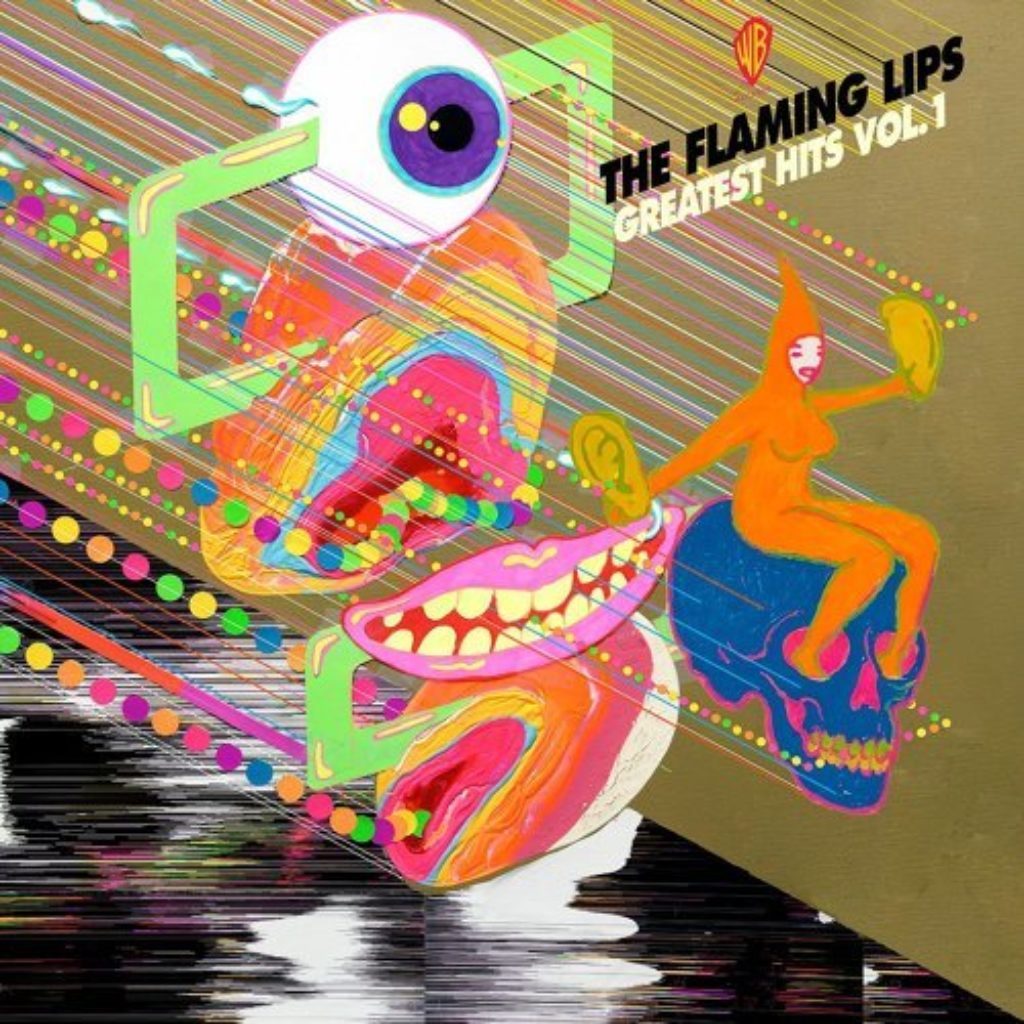
Greatest Hits, Vol. 1
- 2018-06-01
- 51 Songs
Gummy Song Fetus
- 2011-06-25
- 2 Songs
The Flaming Lips Discography Torrent
Gummy Song Skull
- 2011-04-20
- 3 Songs
Hear It Is
- 1986-08-22
- 11 Songs
Hit to Death in the Future Head
- 1992-08-11
- 10 Songs
In a Priest Driven Ambulance
- 1990-09-18
- 10 Songs
It Overtakes Me
- 2006-11-13
- 4 Songs
King's Mouth
- 2019-07-19
- 12 Songs
Oczy Mlody
- 2017-01-13
- 12 Songs
Oh My Gawd!!!
- 1987-01-06
- 11 Songs
Once Beyond Hopelessness
- 2008-11-11
- 12 Songs
Peace Sword
- 2013-11-29
- 6 Songs
Scratching the Door: The First Recordings of the Flaming Lips
- 2018-04-20
- 13 Songs
Shambolic Birth and Early Life Of
- 2002-09-17
- 9 Songs
Strobo Trip - Light & Audio Phase Illusions Toy
- 2011-09-20
- 2 Songs
Telepathic Surgery
- 1989-01-03
- 14 Songs
The Day They Shot a Hole in the Jesus Egg
- 2002-10-01
- 28 Songs
The Flaming Lips
- 1984-01-01
- 5 Songs
The Flaming Lips and Heady Fwends
- 2012-04-21
- 13 Songs
The Flaming Lips and Stardeath and White Dwarfs with Henry Rollins and Peaches Doing The Dark Side of the Moon
- 2009-12-22
- 9 Songs
The King Bug Laughs
- 2015-11-27
- 6 Songs
The Soft Bulletin
- 1999-05-17
- 13 Songs
The Soft Bulletin Live la Fantastique de Institution 2011
The Flaming Lips
- 2011-06-14
- 10 Songs
The Southern Oklahoma Cosmic Trigger Contest
- 2001-03-10
- 3 Songs
The Terror
- 2013-04-01
- 11 Songs
Transmissions from the Satellite Heart
- 1993-06-22
- 11 Songs
Two Blobs Fucking
- 2011-02-14
- 1 Songs
UFO's at the Zoo: The Legendary Concert in Oklahoma City
- 2007-08-21
- 13 Songs
Unconsciously Screamin
- 1990-01-01
- 4 Songs
Void (Video Overview in Deceleration)
- 2005-08-23
- 19 Songs
Flaming Lips Discography
With a Little Help from My Fwends
- 2014-10-27
- 13 Songs
Yeah, I Know It's a Drag . . . But Wastin' Pigs Is Still Radical
- 1991-10-01
- 2 Songs
Yoshimi Battles the Pink Robots
- 2002-07-15
- 11 Songs
Yoshimi Wins! (Live Radio Sessions)
- 2005-11-15
- 8 Songs
Zaireeka
- 1997-10-28
- 32 Songs
 (1990) and Hit To Death In The Future Head (1992) relied on catchy melodies and sound effects in the tradition of early Pink Floyd. Dreamy litanies and surreal ditties became typical of less and less adventurous albums: Transmissions From The Satellite Heart (1993), Clouds Taste Metallic (1995) and The Soft Bulletin (1999). The notable exception was Zaireeka (1997), a set of four discs to be played simultaneously on four different players. Reviews. (Translation from the Italian by Nicole Zimmerman)
Flaming Lips Discography Mega
The music of the Flaming Lips (Wayne Coyne on guitar and vocals, Mike Ivins on bass, Richard English on drums) has been compared to the art of animated cartoons: easily recognizable, rounded forms, a plethora of stereotypes, a collection of spoofs, and a narration that proceeds towards simplification but ends in the implausible. All of which the Flaming Lips have applied to psychedelic rock according to a practice that was not that far off from the creative genius, Frank Zappa.
Fusing ideas from sources as diverse as Miles Davis, Butthole Surfers, Jesus and Mary Chain, and the Beach Boys, their sound became a repository of 'signs' of the pop music culture that transcended the original neo-psychedelic thesis.
In their first discs, Coyne showed a melodramatic personality that expressed itself by borrowing the talking-blues 'curse' of Lou Reed and the possessed recitation of Jim Morrison. The stellar drumming by English, a worthy successor of Keith Moon and John Bonham, was the ideal accompaniment for the vain strumming of the leader.
The debut EP (LSD, 1984), contained the disruptive and distorted My Own Planet, which made it epic, the 'voodoobilly' twist in Bag Full Of Thoughts pulled by the inebriated dancing of medieval poets, and the long 'trip' of Scratching The Door, which paid homage the to the first Pink Floyd; one immediately understood the anti-conformist genius and anarchy that connected their music.

The album Hear It Is (Pink Dust, 1986) contained the group's entire stylistic repertoire. She Is Death was the new and preeminent psychedelic piece in the style of the first incarnation Pink Floyd. With You introduced a genre that would be perfected and profitable ad nauseum: a form of ballad in crescendo that was a derivative of the most morbid song by the Velvet Underground and borrowed from the sleepy soliloquies of Syd Barrett. Unplugged was cleverly placed between country, rockabilly, and punk-rock forms with a tamed ferocity that, as in Just Like Before, injected abrasive rock and roll like that of the Stooges (with a riff that echoed You Really Got Me by the Kinks) and that, as in Man From Pakistan, transformed the music into a captivating and warped rebellious garage-rock. A more traditional type of style, that would soon be dropped, was used for minor but catchy tunes like Trains Brains & Rain, a drinking song that reminds listeners of the Mekons. The climax of the disc came in the long (7 minutes), melodramatic Jesus Shootin' Heroin, a sort of nightmare that borrowed from Lou Reed the pace of his agile boogie, from Neil Young the neurotic guitar and, from Jim Morrison the melodramatic recitation.
The direction of Oh My Gawd (Restless, 1987), with alternations between hard and soft moments, followed that of the previous Hear It Is. Among the beginning tracks included was the burning anthem Everything's Exploding, which united the violent noise of the Stooges with the colossal anxiety of the Animals. Then came Prescription Love, with a long instrumental introduction that sounds like the Pink Floyd of Syd Barrett at double time, and then with a refrain in the feverish rhythm of rockabilly, followed with the distorted guitar of the Cramps. In Can't Stop The Spring, a hypnotic guitar riff is obsessively repeated supporting a circus-like melody reminiscent of the Kinks. Among the latter parts of the album, however, were the first demonstrations of melodic talent by the vocalist and guitarist. There was Thanks To You, with feverish guitar reminiscent of the Who in Tommy, Can't Exist, a tender, psychedelic lullaby, and the long piano ballad of Love Yer Brain, that disintegrated near the end in deaf beats and noises. The Flaming Lips tempted fate for the first time with an extended jam, but more than just a jam, One Million Billionth Of A Millisecond, (9 minutes) was a psychodrama that crossed More by Pink Floyd and Magic Carpet Ride by Steppenwolf. All things considered, it was the weak point of the disc, which otherwise would have been a masterpiece. The more hallucinogenic tracks (uneven, inflated, and filled with sound effects) were Maximum Dream, and above all the LCD-induced grand finale The Ceiling Is Bending. The disc was pleasing, especially to the dogmatic listeners that had turned up their noses to the silliness of Hear It Is and wanted the group to be more serious.
Telepathic Surgery (Restless, 1989), conversely, was the disc on which the personality of the group was clearly identified, a personality that until now remained floating in limbo around the sounds of the 60's. Above all, Coyne perked up and accentuated his sarcastic humor, irreverent disposition, and the animated cartoon approach (the jests of Hari-Krishna Stomp Wagon and Redneck School Of Technology, worthy of Bonzo Band). Then the arsenal of gimmicks was excessively applied and the truly infinite fragments came together in the studio. Finally, the dark side of their music triumphed, that side which joined crude space-rock and savagery like that of Hawkwind and epic underground-rock (rather than pretentious rock by the Who), and precision like that of Pink Floyd. While representing their technical and compositional apex, this disc was also the most authentic expression of the outcast/rebel spirit of the band. Their creed was noticeable from the beginning in Drug Machine In Heaven, but even more so in Frying' Up, which was propelled by the riff of Born To Be Wild. The quotations took on the importance of post-modern discourses in: Right Now, which attempted to amalgamate the pulsations and screams of Interstellar Overdrive and the pulses of My Generation, and Chrome Plated Suicide, on which the skillful singer mixed 2 famous arias from Blowing In The Wind and Tommy into one refrain. The monumental Hell's Angel's Cracker Factory (only on the CD version of the disc) was one of the tracks that aspired to the title 'masterpiece of the 80's'. Hell's was a mosaic piece in the spirit of the 60's, of those more offensive tracks by the Fugs in Virgin Forest and early Frank Zappa.
In A Priest Driven Ambulance (Restless, 1990) assisted the group in its first changes: to the craziest trio of the decade was added the guitarist John Donahue (also in Mercury Rev), who, from the first chords played, seemed to understand the folly of his companions. English in the meantime abandoned music, tired of concerts and recording studios; his successor was Nathan Roberts. It was this disc in which the psychedelic rock of the Flaming Lips began to mature into something else, less eccentric and disorganized, more linear and compact. The beginning, Shine On Sweet Jesus, was 'by the book', with furious distortions like Chrome, a hammering martial pulse and a refrain with a psychedelic beat worthy of Syd Barrett, topped off with a chorus of humorous singing both low and high like the vocal groups of the 50's. Along the lines of style of Barrett-Hitchcock, which was largely the soul of this work, Unconsciously Screamin' was the most hallucinatory track, since the spatial refrain by Coyne left room for the torrential acid discharges from the guitar. Here, as elsewhere, it was evident they were indebted to the catastrophic instrumentals by the Who. The style of Barrett was more vivid in the surreal and fairytale type ballad Rainin' Babies, marred by feedback in a celestial sound. More characteristic was the alternation between styles (the musical version of Dr. Jekyll and Mr. Hyde) - acoustic and electric. In the first style Coyne displayed intimacy on Five Stop Mother Superior Rain, lightly touching upon Bob Dylan, the folksinger that debuted with the depressed lament of Stand In Line. Mr. Hyde comes out in God Walks Among Us, which picked up where Shine On Sweet Jesus left off with another set of tribal rhythms and maniacal injections, psychedelic refrains of filtered singing, and electric guitar charges. The characteristic effects were often head-spinning, while one must also merit the producer Dave Fridmann, who played bass for Mercury Rev. Fridmann showed off as director in the studio - unleashing a dream that few get to realize while his work of manipulation left a decisive imprint on the disc, not giving rest to the listener. Mountain Side was their instrumental enlightenment. It was less like an encyclopedia than the previous album (in the sense that the quotations were less numerous and less obvious), less conditioned by punk of 2 chords and by the junky sound of garage-rock, and always in line with the philosophy of B movie soundtracks (science fiction and horror). In A Priest Driven Ambulance suffered only due to the lack of fundamental tracks. Even if the disc was worth less than Hear It Is and Telepathic Surgery (the CD), 2 'songs about Jesus' at least, God Walks Among Us and Shine On Sweet Jesus, as well as Unconsciously Screamin' entered into the repertoire.
With the disc Hit To Death In The Future Head (Warner Brothers, 1992), which was both confused and unresolved, the group tried more than anything to be heard by a wider audience, as reflected in the more pop style tracks such as Everyone Wants To Live Forever, which was agile and aggressive like their best rock and roll tracks. However, stealing the show was the refrain, one of the catchiest of their career; Halloween On The Barbary Coast, was their counterpoint on the other side, with a more pressing guitar riff and a performance that was a bit raga. Other memorable melodies emerge in the folk-rock march of Hit It, and in the melodic sketch similar to that of the Kinks (with the surreal style of Pink Floyd) of Gingerale Afternoon. The culmination of the mannerisms of this disc was Frogs, which transformed the dazed and off-key chiming rhythm into demented chaos. The tracks were full, as usual, with humorous findings, but in general the recording was more serious and determined than in the past: these were professional songs, certainly not amateur garage-rock. A disorder prevails that was almost too composed. Just about all of the melodious tracks repeated the same pattern: they were psychedelic rhymes conducted in dry tones and fuzz grinding on the guitar, strengthened by spatial chorus' in falsetto with Baroque trumpets, and above all, spoiled by a chronic infantilism.
Complementary to those naive refrains, were the more hallucinogenic tracks, that immersed themselves in soft and languid sounds, in which one can hear the influence of the vocal harmonies by CSN&Y and in the bucolic folk of White Album (The Sun). And so the atmospheric summit of the disc was the feeble prayer embellished by dissonance that concluded the track Hold Your Head. In the Baroque style of Oh My Gawd, and far from their antagonistic sound, the creative and iconoclastic style of the other disks, Hit To Death signaled the technical (if not artistic) maturation of the group. The guitar, in particular, had never been so clear and balanced. For his part Coyne improved as a song-writer as well as a singer: as a writer who put together serious and polished text, and as a singer who resurrected the prophetic and desperate feelings of the many teenagers during the 80's by way of Westerberg. Frogs, Everyone Wants To Love Forever, and Gingerale Afternoon became instant classics.
Coyne's philosophy was that of a modern poet: alienation of the rural uneducated class, and verses of an older poet who writes of alienation of the urban educated. The group's intellectual level was well represented by the lyrics 'You're fucked if you do and you're fucked if you don't', akin to a mid-western truck driver and certainly not like the intellectual snob who enjoys the photographic style of Andy Warhol. Coyne did not have much to say: life, death, love. His universe ended there. His universe wasn't a grim and sinister 'nothing', but simply a deformed 'circus of the absurd'.
Flaming Lips Allmusic
The rough times had not ended however: Roberts (recently married) was replaced by multi-instrumentalist Steven Drozd, and Donahue (who launched a solo career) was replaced by Ronald Jones. Transmissions From The Satellite Heart (Warner Brothers, 1993) confirmed the talent of Ivins and Coyne for composing catchy refrains and submerging them in a sea of sound effects; but this time the psychedelic was no longer a reason to put together animated cartoons, no longer a personification for surreal documentaries, but was reduced to a minimum, to a simple sound in the tradition of late Pink Floyd and also Sgt. Pepper. Frequently, Coyne took refuge in a lullaby that was dreamy and sad; such was the case in Turn It On, Superhumans, and Chewin' On The Apple Of Your Eye, with arrangements that varied from acoustic to classical. There was a pair of psychedelic demonstrations (lousy arrangements, amateur rhythms, and cascading effects) in Pilot At The Can Of God and Be My Head, which did not deviate, more or less, from the middle tone. The notable surreal jest of She Don't Use Jelly was the manual of how the Flaming Lips composed memorable songs: a rhyme, a chime, and a march (a borrowed theme, in this case specifically from the Rolling Stones You Can't Always Get What You Want). Coyne found that his dull and narcotic song book had the same power of suggestion as did Roger Waters, and that he could 'sell' his trance ballads in lounges. To their fans, the boys from Oklahoma, gave 3 more gems: Moth In The Incubator, during which the chaos of the sound effects took over and unleashed a psychedelic 'ride' in crescendo; the faint march of Oh My Pregnant Head, flooded with reverbs and fuzz; and the finale of Vegetable, in which Coyne plunged into another one of his catastrophic crises, but this time everything (the pace of march drums, languid wails of the acoustic guitar, fragile chimes of the xylophone, and martial distortions of the electric guitar) was truly demented.
The Flaming Lips triumphed by the painstaking care in which they arranged these tracks. This was, in effect, the Dark Side Of The Moon for the Flaming Lips, in which the group transformed a sound they forged for years by experimentation (layered quotes and noises) into a trademark.
The group had to wait months to release their next album because the classical composition of Transmissions penetrated the nervous systems of the masses, but in the end they took satisfaction in hearing their songs on popular radio. Clouds Taste Metallic (Warner Brothers, 1995) was along the same line: convoluted ballads, whispered between the dreamy and vulnerable laments by Coyne, and an extravagant array of sound effects. This was how the solemn tracks, The Abandoned Hospital Ship and They Punctured My Yolk, were created, but they had already been heard many times in the preceding discs. Every now and then (Psychiatric Explorations Of The Fetus With Needles) the group returned to the epic chord progression of the first Pink Floyd, and every now and then a rhyme with a more lively rhythm (Kim's Watermelon Gun) ushered forth from the general dullness, but the march of Bad Days (that borrowed the refrain of the 1963 hit I Will Follow Him) was given the most unlikely arrangement - only sobs. The 'She Don't Use Jelly' of the disc was Brainville, a whispered country-vaudeville style chorus. The only surreal lyrics (among the protagonists there were brains, giraffes, molecules, and rifles in the form of watermelons) to be heard paid homage to the myth, but the psychedelic chaos that made them famous was gone. the Flaming Lips compensated with their ability to produce and to refine in the studio; to blend the classes. The somewhat forced burlesque style of This Here Giraffe, Christmas At The Zoo, and Guy Who Got A Headache And Accidentally Saves The World however, had arias that were a little too distorted which denoted a very tired group.
The story of the Flaming Lips could be summarized as: the first period (the first album and Hear It Is) still in limbo with garage-rock; the explosion of a (still Baroque) psychedelic verve in Oh My Gawd; the rationalization of their ideology in post-modern songs on Surgery; Ambulance which signaled the apex of the schizophrenic crisis of the group's soul torn between the garage-rock of their beginning and the convoluted harmonies of their maturity; Hit To Death used that same schizophrenia to experiment with form; Transmissions adapted that form as dogma within the ballad style of Neil Young.